

Peter's Model Railroading | The PRR Chartiers Branch | Equipment
G5

Purpose
The PRR G5 had a 4-6-0 wheel arrangement (commonly referred to as a "Ten Wheeler"), which was used on the branch line primarily for commuter trains, but was also found pulling light freight trains. These were the most-often found locomotives running on the Chartiers branch. One reason was that their tenders had back-up headlights, which was important since there were limited opportunities to turn engines on the branch.
Construction
The PRR's Altoona Machine Shops built 90 of these locomotives between 1920 and 1925. The G5s variant was built starting in 1924. This makes them a candidate for me to model as they fit my era.
Specifications
These locomotives had 68-inch driver wheels and 33-inch pilot wheels. The engine's length was 38'2", and the tender was 29'7" long, making for a total coupled length of 78'6" (this is 14-3/4" in S-scale / 1:64). Its height came to 12 feet.
Performance
The engine could produce 41,328 pound-feet of tractive effort and was estimated to have a top speed of 60mph. The engine accelerated quickly, was easy to use due to its short length, but was reported as "rough riding" by the engineers. The engine was created by William F. Kiesel, Jr. by taking an E6 boiler and putting on a custom frame that had the rear drivers put back some distance, so that no trailing truck was necessary. This is what gave it its quick acceleration ability as most of the weight sat on the rear drivers.
Photos
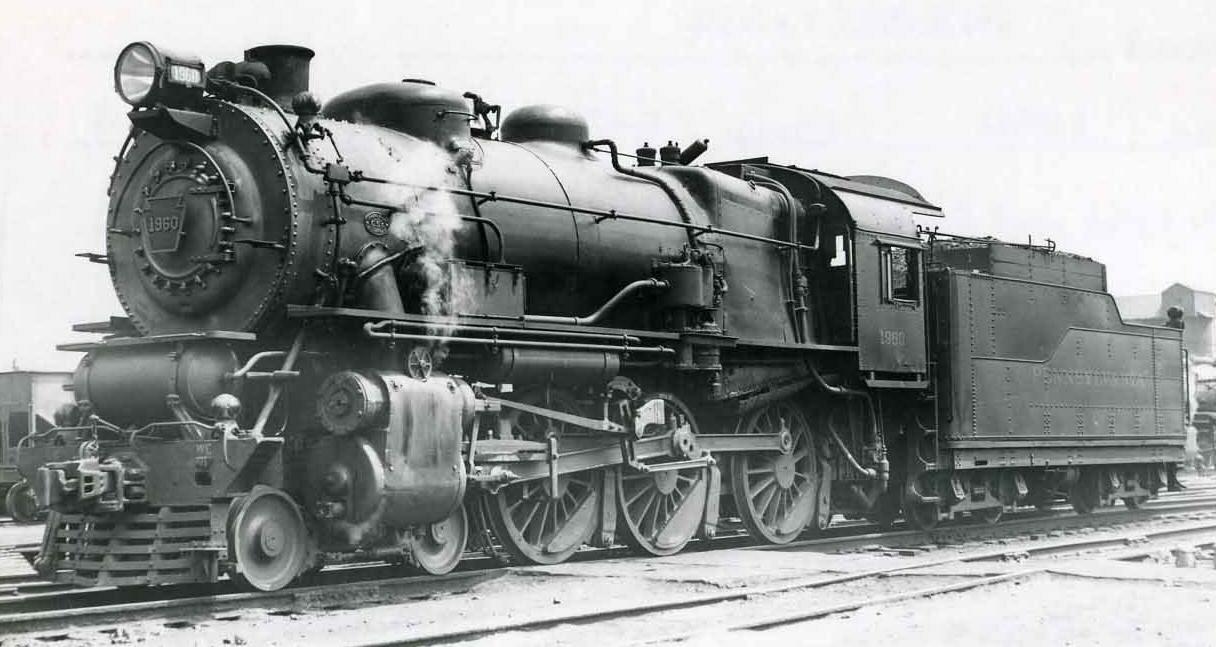
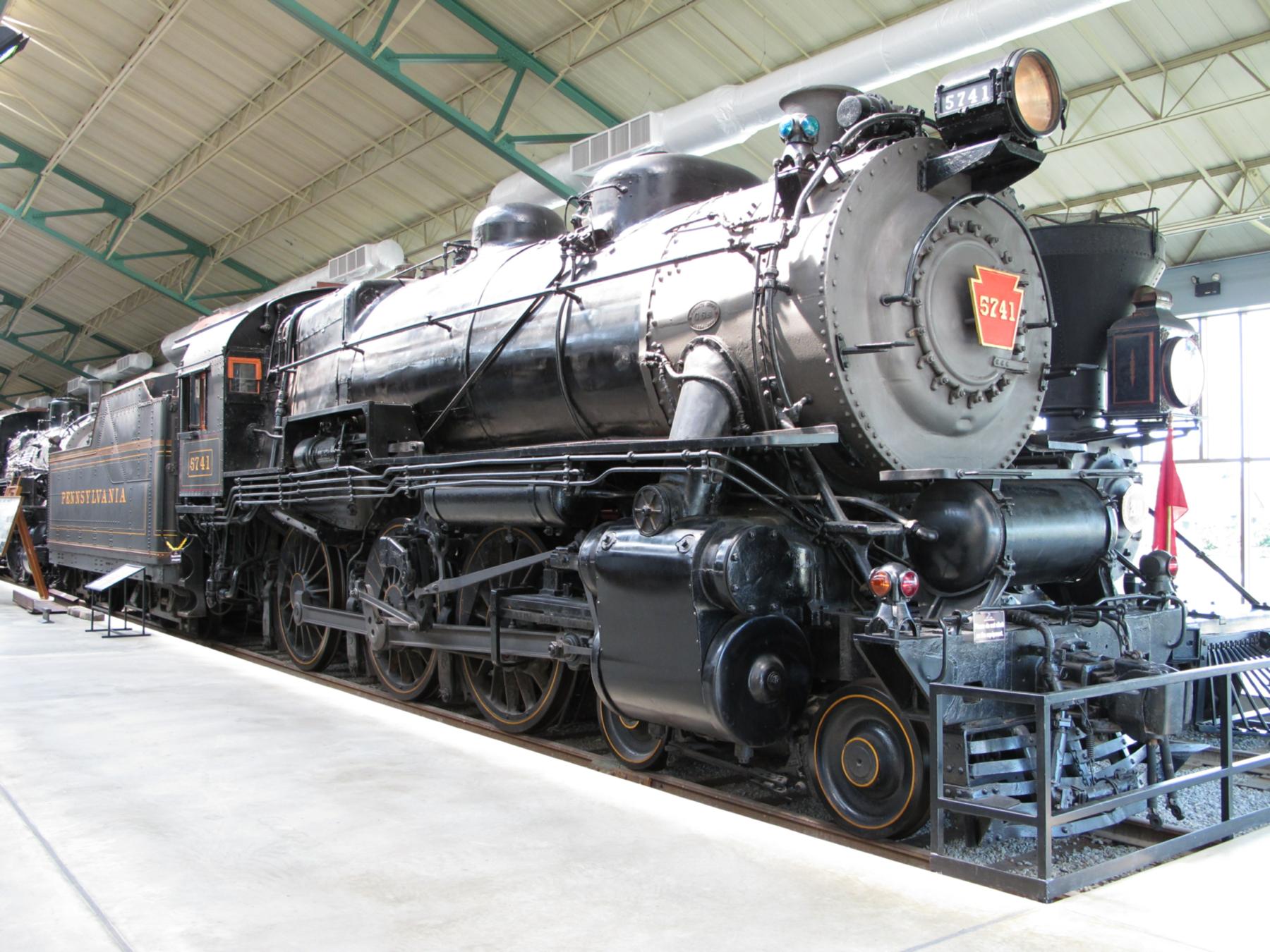
PRR #5741 is one of the models preserved, so designated by the PRR itself when it was retired from service in December 1955. It was added to the National Register of Historic Places in 1979. It is kept at the Railroad Museum of Pennsylvania near Strasburg, PA., where I took this photo.
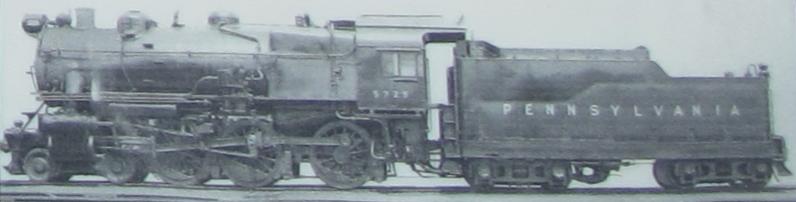
The side profile shows the compact design of this locomotive
References
Data
Photos
- RR Picture Archives (large collection)
- North East Rail (large collection)
- Gary Mittner's Listing (all 90 locomotives)
- History Pittsburgh (a handful of photos)
- The PRRT&HS The Keystone Winter 2020 issue has a photo of #1962 on page 24.
- The PRRT&HS The Keystone Winter 2025 issue provided prototype information about the LIRR G5s, which were near identical.